
What Is PMOS? Understanding the New Name for PCOS
Maybe you've carried a PCOS diagnosis for years. Maybe you're still searching for answers about your irregular periods, stubborn weight changes, or skin concerns that never quite fit a simple explanation. And then, seemingly out of nowhere, a new name appeared in headlines: PMOS.
It can feel disorienting. But here's the most important thing to know: this isn't a new disease. It's a better, more accurate understanding of an existing one, one that has been misnamed, misunderstood, and too often misdiagnosed for decades.
This article explains exactly what changed, why it matters, and what it means for the care you deserve.
So, What Exactly Changed?
The condition previously known as Polycystic Ovary Syndrome (PCOS) is now officially called Polyendocrine Metabolic Ovarian Syndrome, PMOS. The change was published in The Lancet on May 12, 2026, and endorsed by more than 56 major academic, clinical, and patient organizations worldwide.
This was not a rebranding exercise. It was a rigorous, decade-long scientific process involving roughly 22,000 doctors, researchers, patients, and advocacy groups across the globe, a truly unprecedented level of collaboration in medical history.
If you had PCOS, you now have PMOS. Same condition. Same you. A name that finally does the condition justice.
The name change comes with a clear clinical intention: to fix structural mischaracterizations in medical education, diagnostic coding, and patient care that have persisted for decades.
Why Was "PCOS" a Misleading Name?
The word "polycystic" implies that ovarian cysts are the defining feature of the condition. The problem? They're not, and many women with this condition never develop cysts at all. This single misnomer has caused decades of delayed and missed diagnoses.
Centering the name on the ovaries also obscured the far bigger picture: PMOS is a full-body hormonal and metabolic disorder. It affects the cardiovascular system, skin, mental health, and metabolism, not just the reproductive system.
The result was fragmented care: patients bounced between gynecologists, dermatologists, and endocrinologists, with no one connecting the dots into a unified diagnosis or treatment plan.
The old name also contributed to stigma and curtailed research investment and policy attention. In short, it was inaccurate in ways that actively harmed the people living with it.
What Does PMOS Actually Mean?
Each word in the new name was chosen with precision. Together, they tell a much more complete story:
Polyendocrine: Recognizes that multiple hormonal systems are involved, not just reproductive hormones, but also insulin, androgens, and neuroendocrine hormones acting together.
Metabolic: Acknowledges the inherent metabolic features: insulin resistance, weight changes, and increased risks for type 2 diabetes and cardiovascular disease.
Ovarian: Retains the connection to ovarian dysfunction, including irregular ovulation and fertility, while making clear this is one part of a larger picture.
Syndrome: A collection of signs and symptoms that co-occur, not a single disease with a single cause, but a complex, multisystem condition.
PMOS is driven by two interconnected mechanisms: insulin resistance and excess androgen (particularly testosterone). These affect reproductive health, metabolism, skin, mental health, and long-term cardiovascular risk.
Who Gets PMOS?
PMOS affects 1 in 8 women, more than 170 million people worldwide.
It typically appears during the reproductive years, sometimes as early as puberty. Yet it often goes undetected until a woman has trouble conceiving, a delay the name change is specifically designed to help correct.
One of the most persistent misconceptions: that PMOS only affects women with higher body weight. It doesn't. Women of any body type can have PMOS, and lean women are frequently missed by providers who associate the condition with a particular appearance.
What Are the Symptoms?
Providers look for three primary clinical signs. A diagnosis typically requires two or more of the following:
Irregular or absent periods: unpredictable cycles, very long gaps, or periods that stop altogether.
Signs of excess androgen: facial hair (hirsutism), persistent acne, or hair thinning on the scalp.
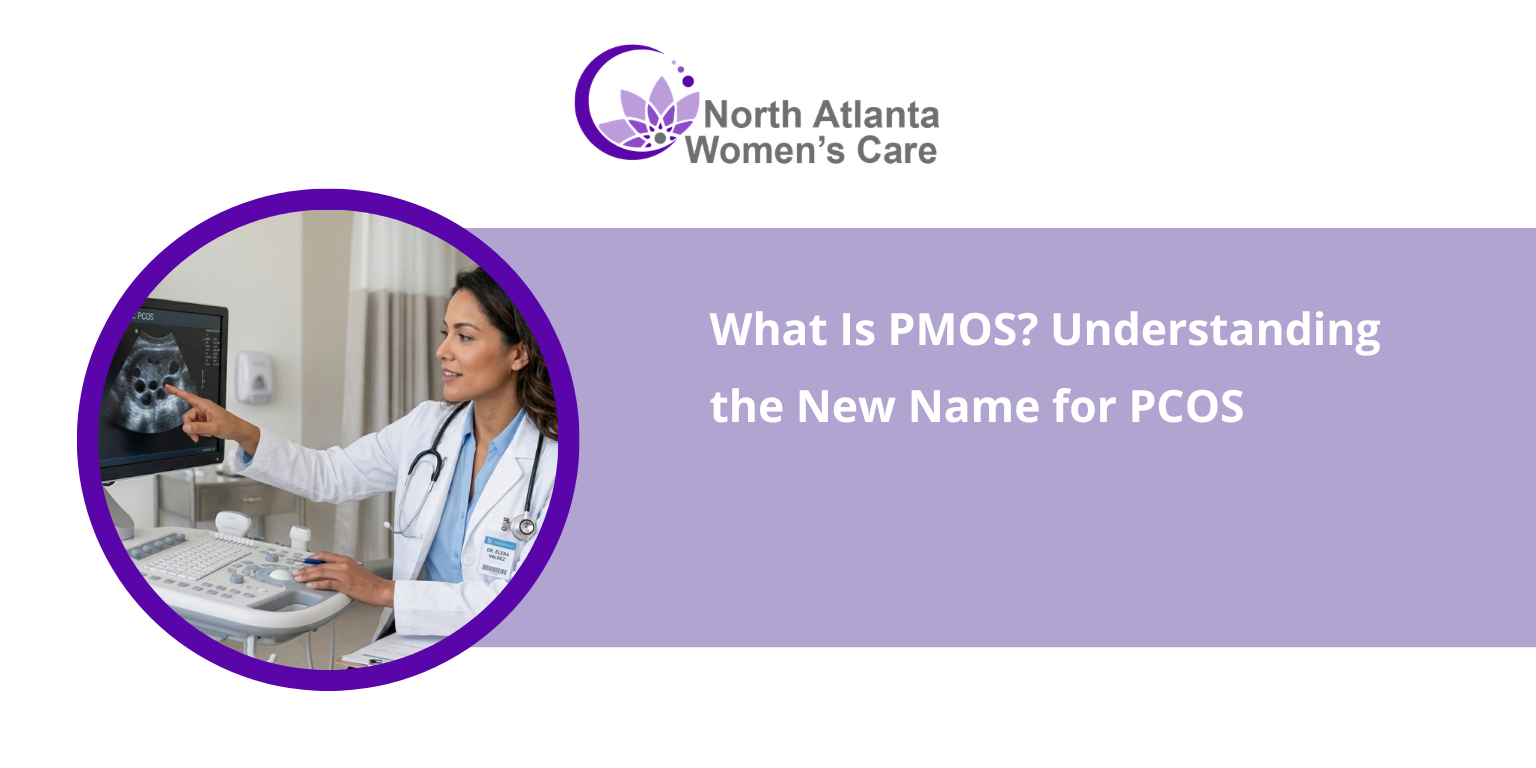
Polycystic-appearing ovaries on ultrasound: visible on imaging, but importantly, a normal ultrasound does not rule out PMOS.
Additional symptoms that are frequently overlooked include weight gain or difficulty losing weight, blood sugar fluctuations and insulin resistance, high cholesterol or blood pressure, and anxiety and depression.
Why So Many Women Go Undiagnosed And How PMOS Helps
For years, a normal ultrasound ended the conversation. It shouldn't. Lean women, women without visible androgen symptoms, younger patients, and those who haven't started trying to conceive are frequently missed under the old diagnostic approach.
The PMOS framework changes the workup. Instead of relying on an ultrasound alone, providers are encouraged to evaluate hormone levels, fasting insulin, glucose, and a full lipid panel together, giving a complete picture of what's actually happening in the body.
The name change also actively encourages multidisciplinary care rather than siloed treatment. That means an endocrinologist, a gynecologist, a cardiologist when needed, a mental health provider, and a dietitian can all be part of one coordinated approach.
How Is PMOS Treated?
There is no cure for PMOS, but it is highly manageable and the evidence is strong that addressing the underlying metabolic drivers first leads to the best outcomes.
Lifestyle and nutrition changes: anti-inflammatory, lower-glycaemic eating patterns and consistent movement can meaningfully reduce insulin resistance and androgen levels.
Insulin-sensitizing medications: such as metformin, to directly target metabolic dysfunction.
GLP-1 receptor agonists: showing significant promise for both metabolic outcomes and fertility in emerging research.
Fertility support: ovulation induction and assisted reproduction when conception is a goal.
Skin and hormonal treatments, including oral contraceptives or anti-androgens for those managing acne or hirsutism.
Mental health support: therapy and, when appropriate, medication for anxiety and depression, which deserve the same clinical attention as physical symptoms.
The key principle: treatment should be comprehensive and address the whole person, not just the most visible symptom.
What Should You Do If You Think You Have PMOS?
Don't wait for a fertility issue to bring this to a doctor's attention. The earlier PMOS is identified and managed, the better the long-term outcomes for metabolic and cardiovascular health.
- Advocate for a full evaluation, not just an ultrasound. Ask for a menstrual history review, androgen blood tests, fasting insulin, glucose, and a lipid panel.
- Know that a normal ultrasound does not rule out PMOS. Push further if you have other symptoms.
- Seek providers who understand PMOS as a metabolic condition, not just a gynecological one.
- If you feel dismissed, get a second opinion. This condition affects 1 in 8 women, you deserve thorough, comprehensive care.
Why the PMOS Change Matters
The transition from PCOS to PMOS marks an important step toward a more accurate understanding of this complex condition. By recognizing its hormonal, metabolic, and reproductive impacts, healthcare providers can deliver more comprehensive care. Greater awareness can lead to earlier diagnosis, better treatment outcomes, and a more informed approach to long-term health and well-being.
Get Answers About PMOS at North Atlanta Women’s Care
A PMOS diagnosis can raise many questions, but you don't have to navigate them alone. At North Atlanta Women’s Care, our team provides personalized evaluations, compassionate guidance, and comprehensive care to help you better understand your symptoms and support your long-term health.
Schedule a consultation today and take the next step toward greater clarity, confidence, and well-being.
FAQs
Does PMOS affect mental health?
Yes, PMOS can influence mood, anxiety, and depression due to hormonal and metabolic imbalances.
Can teenagers be diagnosed with PMOS?
Yes, symptoms often begin in adolescence, though diagnosis may take time.
Does PMOS go away after menopause?
Symptoms may change, but the underlying metabolic tendencies can persist.
Is PMOS hereditary?
Genetics can play a role, so family history may increase risk.
Does PMOS increase diabetes or heart disease risk?
Yes, insulin resistance linked to PMOS can raise long-term metabolic and cardiovascular risks.

Be the first to post a comment
Leave a Reply Cancel reply