
How Often Should You See Your OB/GYN During Pregnancy? A Trimester-by-Trimester Guide
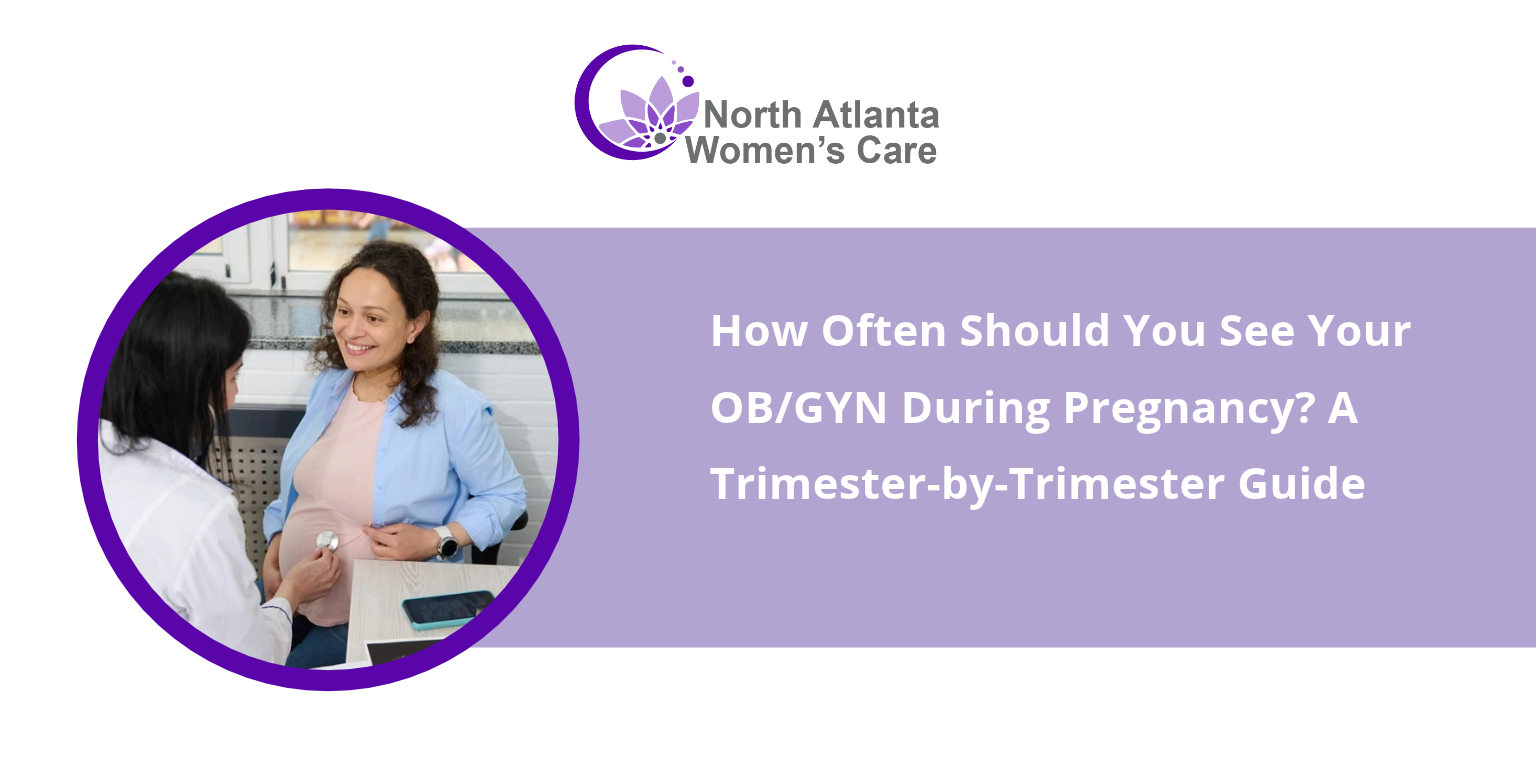
A pregnancy calendar fills up quickly, and many expectant mothers wonder whether they are seeing their OB/GYN too often or not often enough. The answer follows a steady rhythm: visits are spread out early on, then grow closer together as delivery approaches.
Your own schedule also depends on your health history and how the pregnancy is progressing. Knowing what each stage involves makes it easier to plan around work, childcare, and family.
Your Prenatal Appointment Schedule at a Glance
For a low-risk pregnancy, visits typically happen about every four weeks until 28 weeks, every two weeks until 36 weeks, and weekly until delivery. That adds up to roughly 12 to 14 visits.
The traditional 12 to 14 visit model is now more flexible, since current guidance on tailored prenatal care allows providers to adjust visit frequency to each patient's medical and social needs.
| Stage | Weeks | Typical Visit Frequency |
|---|---|---|
| First trimester | 1 to 13 | First visit around 8 weeks, then about every 4 weeks |
| Second trimester | 14 to 27 | About every 4 weeks |
| Early third trimester | 28 to 35 | Every 2 weeks |
| Late third trimester | 36 to delivery | Every week |
Treat this as a starting point. Your provider may space visits out for a healthy pregnancy or add visits when closer monitoring helps.
First Trimester: The First Visit and Early Screening
Most practices schedule the first prenatal appointment around 8 weeks, so calling as soon as you have a positive test helps you get on the calendar. This visit is longer than the rest and sets the baseline for your care.
Expect a detailed health history, a physical exam, and bloodwork that checks blood type, Rh factor, anemia, and immunity to infections such as rubella. An early ultrasound may confirm the due date and heartbeat.
Between roughly 10 and 13 weeks, you can choose optional genetic screening, such as a blood test. To see how early scans fit in, read about why ultrasounds are essential in pregnancy.
Early visits are also the time to talk through nausea, fatigue, and which medications are safe to take. Small questions at the start prevent worry later.
Second Trimester: Steady Monthly Check-Ins
Visits stay about four weeks apart. Each one usually includes a blood pressure check, a urine test, your weight, a measurement of your growing belly, and a listen to the baby's heartbeat.
Many women feel the first fluttery movements between 18 and 20 weeks. Mention when you notice them, and ask how to track movement as the pregnancy advances.
Around 18 to 22 weeks, a detailed anatomy ultrasound reviews the baby's growth and development. Many parents also learn the baby's sex at this scan, if they wish.
Between 24 and 28 weeks, a glucose test screens for gestational diabetes. If your blood type is Rh-negative, an injection around 28 weeks may also be part of your plan.
Third Trimester: More Frequent Visits Before Delivery
At 28 weeks, visits move to every two weeks, and at 36 weeks they become weekly. The closer schedule lets your provider track blood pressure, the baby's position, and any early signs of labor.
The Tdap vaccine is typically offered between 27 and 36 weeks to help protect your newborn from whooping cough. Your provider may also discuss flu and RSV vaccines, depending on the season.
Between 36 and 38 weeks, a group B strep swab is common. Later visits cover your birth plan and hospital preparation, and many parents also join childbirth classes to prepare for labor and delivery.
Many practices also review kick counts in this stage. A noticeable drop in movement is a reason to call the office the same day.
When Your Schedule May Look Different
Some pregnancies need extra monitoring. Common reasons include maternal age over 35, high blood pressure, diabetes, a history of preterm birth, or carrying twins. Care for a high-risk pregnancy is built around that closer attention, often with added ultrasounds and testing.
A previous cesarean delivery can also shape your plan. Women who hope to try a vaginal birth after cesarean often benefit from early conversations about their options.
On the other hand, some healthy pregnancies may use fewer in-person visits, with phone or video check-ins filling the gaps. Ask your provider which format fits your pregnancy.
How to Prepare for Each Visit
A little preparation makes shorter visits count. Keep a running list of questions on your phone and note any symptoms with the date they started.
Bring a list of your medications and supplements, including your prenatal vitamin, so your provider can review everything in one place. Write down any changes in how the baby is moving as well.
When to Call Between Appointments
A scheduled visit is never the only time to reach out. The CDC advises getting medical care right away for any of these urgent maternal warning signs:
- A severe headache that will not go away or keeps getting worse
- Dizziness or fainting
- Changes in your vision
- Fever of 100.4°F or higher
- Extreme swelling of your hands or face
- The baby moving less or stopping
- Vaginal bleeding or leaking fluid
Trust your instincts. If something feels wrong, call the office, even if it is not on this list.
Making the Most of Every Prenatal Visit
A prenatal appointment schedule is a framework, not a script. Most healthy pregnancies move from monthly visits to every two weeks, then weekly, with key screenings placed along the way. Keeping those visits gives your care team time to catch changes early and answer your questions.
Every pregnancy is different, so use this timeline as a starting point for conversation. If something feels off between appointments, calling the office is always appropriate.
North Atlanta Women's Care provides prenatal care and delivery at its Suwanee/Johns Creek, Alpharetta, Cumming, and Lawrenceville offices. To plan your visit, request an appointment or call 770-771-5270.
Frequently Asked Questions
When should I schedule my first prenatal appointment?
Call as soon as you have a positive test, since most practices see new patients around 8 weeks.
How many ultrasounds will I have?
Most women have at least two, one in the first trimester and one around 18 to 22 weeks, with more added when needed.
Do I still need visits if my pregnancy feels normal?
Yes, because changes in blood pressure or blood sugar often cause no symptoms early on.
Can some prenatal visits happen by phone or video?
Some visits may, depending on your pregnancy, so ask the office which options are available.
What should I bring to my first visit?
Bring your medication and supplement list, your medical and pregnancy history, and any questions you have.

Be the first to post a comment
Leave a Reply Cancel reply